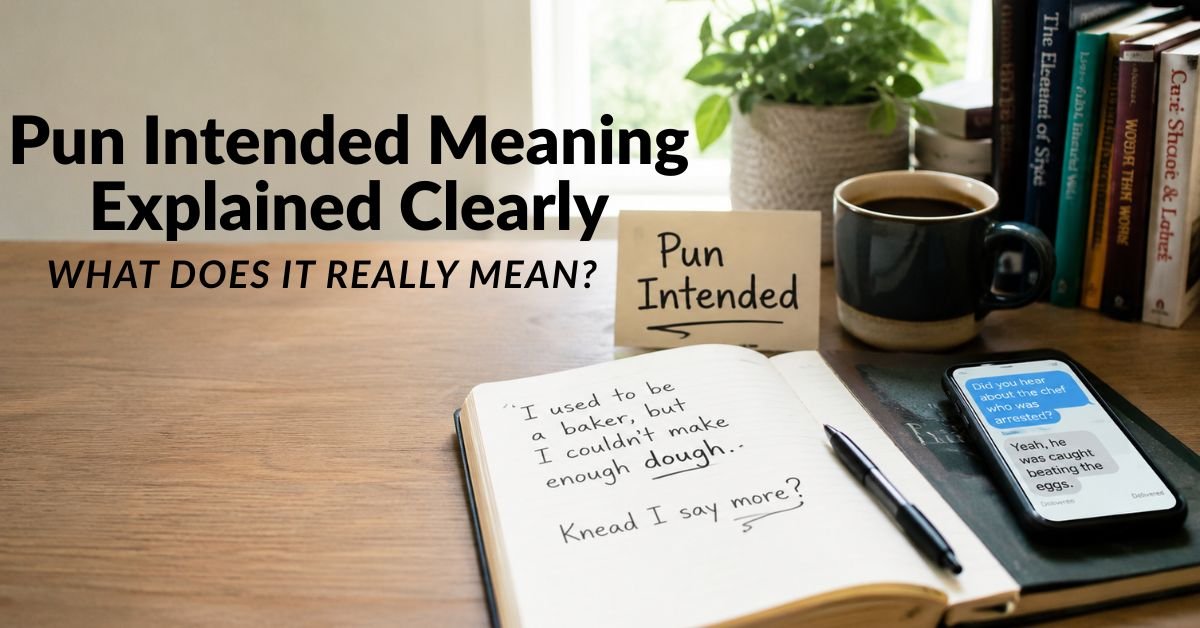
Pun Intended Meaning Explained Clearly With Examples
If you’ve ever read a sentence and then hit the words “pun intended” tacked onto the end, you might have paused for a second. Is it a joke? An apology? A weird grammar quirk? The pun intended meaning explained clearly is actually pretty simple once you know what it’s flagging and once you see it in a few real sentences, you’ll never wonder about it again.
This guide breaks down what the phrase means, where it comes from, how it’s actually used in speech and writing, and how it compares to its more common cousin, “no pun intended.” You’ll also get practical examples you can use right away.
What Does “Pun Intended” Mean?
“Pun intended” means the wordplay you just read or heard was done on purpose. The speaker or writer noticed that a word or phrase had a double meaning, chose to use it anyway, and wants you to know it wasn’t an accident.
It’s a small aside, usually dropped in right after the pun itself, that says: yes, I see what I did there, and I meant to do it.
What Does “Intended” Mean Here?
“Intended” simply means “done on purpose” or “meant.” You’ll see the same word doing similar work in phrases like “no offense intended” or “as intended.” In each case, it separates something deliberate from something accidental.
So when someone says “pun intended,” they’re using “intended” the same way pointing at their own choice and confirming it was conscious, not a slip.
What Is a Pun?
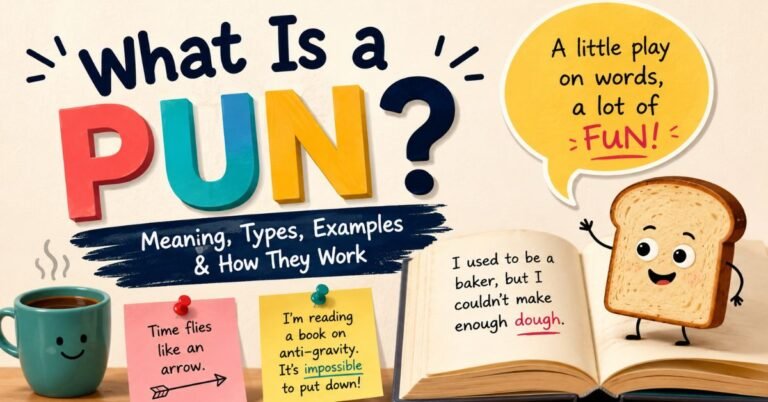
A pun is a form of wordplay that uses a word’s multiple meanings, or its similarity in sound to another word, to create a double meaning usually for comic or clever effect. Understanding what a pun actually is makes the rest of this article much easier to follow.
How Puns Create Wordplay
Puns work by taking advantage of ambiguity in language. English is full of words that sound alike but mean different things, or single words that carry more than one meaning depending on context. A pun leans into that overlap on purpose.
For example, a baker complaining about a slow morning might say business was “on a roll” leaning on the double meaning between bread and a busy streak. That’s the basic mechanic behind almost every pun you’ll come across.
Common Types of Puns
Not all puns work the same way. Here are the main categories you’ll run into:
- Homophonic puns built on words that sound alike but are spelled differently or mean something different (a dentist who says his job has “a lot of ups and downs” when discussing braces).
- Homographic puns one word, two meanings, same spelling (calling a strict math teacher someone who “means business”).
- Compound or phrase-based puns twisting a familiar phrase or idiom to fit a new context (“lettuce” turn to the next topic).
- Visual or written puns wordplay that only really works on the page, often in headlines or signs, where formatting or spelling does part of the joke.
How “Pun Intended” Is Used
Knowing how to use “pun intended” matters just as much as knowing what it means. The phrase shows up differently depending on whether you’re speaking or writing.
In Everyday Conversation
In conversation, “pun intended” usually comes right after the joke, often with a small pause or a knowing look before it. It’s a verbal wink.
“That new bakery really rose to the occasion pun intended.”
The timing matters here. Say it too early and it spoils the joke; too late and people may have already moved on.
In Texts, Social Media, and Writing
In writing, the phrase usually appears in parentheses right after the pun, or at the very end of a sentence. It’s common in captions, headlines, casual articles, and marketing copy where a little humor is welcome.
A gardening blog headline: “Why Mulch Ado Is Made About Composting (Pun Intended).”
This written version does the same job as the spoken one it confirms the joke wasn’t accidental but it reads more like a wink to the audience than a live aside.
10 Practical Examples
Here are ten real-world sentences showing “pun intended” used naturally across different situations:
- Text message: “Running late because my car battery died talk about a shocking start to the day, pun intended.”
- Instagram caption: “New sneakers, same tired feet. Sole searching, pun intended.”
- Work email: “Our Q3 numbers are finally trending up we’re really turning a corner, pun intended.”
- Spoken aside at dinner: “This soup needs more seasoning. It’s a little flat, pun intended, since I forgot the salt.”
- Article intro: “The bakery’s new sourdough line is really proving itself, pun intended.”
- Sports commentary: “The goalkeeper made a save for the ages he really nailed it, pun intended, given it was his last game.”
- Product description: “This umbrella brand is really making it rain pun intended with their new waterproof line.”
- Casual group chat: “I tried yoga for the first time and I’m still processing how bent out of shape I got, pun intended.”
- Headline: “Local Vineyard Owners Are Grape at What They Do (Pun Intended).”
- Voicemail: “Hey, calling about the plumbing quote figured I’d wade into it, pun intended, before the pipes get worse.”
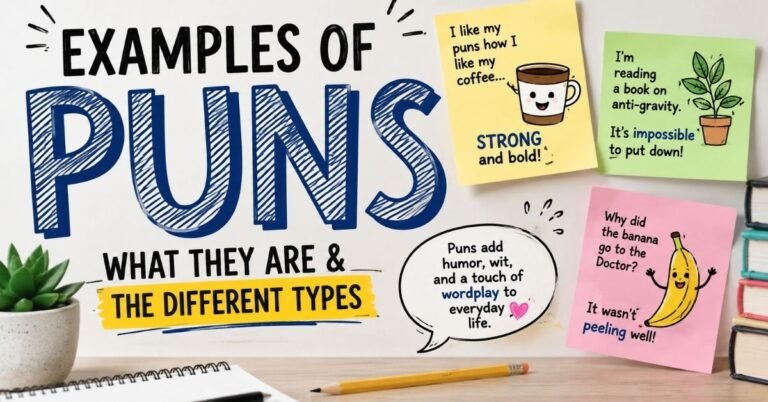
Read More About : Examples of Puns: What They Are and the Different Types
When Should You Use “Pun Intended”?
When the Wordplay Is Deliberate
The clearest case is simple: if you planned the pun and want people to know it, “pun intended” fits. This is the phrase doing its most basic job confirming the joke was on purpose.
When You Want to Highlight the Joke
Sometimes a pun is quiet enough that it could slip past unnoticed. Adding “pun intended” nudges the reader or listener to go back and catch it, especially in longer sentences where the double meaning isn’t front and center.
When It May Sound Accidental
Occasionally, a sentence can accidentally read like wordplay, especially in serious or technical writing. In that case, “pun intended” clarifies that the double meaning was noticed and chosen, rather than something the writer stumbled into and left unaddressed.
“Pun Intended” vs. “No Pun Intended”
These two phrases look almost identical but do the opposite job.
pun intended meaning explained clearly
This version confirms the double meaning was planned. It’s used when the writer or speaker wants credit for the joke and wants the audience to notice it.
“No Pun Intended”
This is actually the older and more common of the two. It’s used when a double meaning shows up by accident, and the speaker wants to make clear they weren’t trying to be clever sometimes to avoid seeming like they’re showing off, and sometimes just to acknowledge the coincidence before moving on.
Quick Comparison
| Phrase | Used When |
| Pun intended | The wordplay was planned, and the speaker wants it noticed |
| No pun intended | The double meaning happened by accident, and the speaker wants to clarify that |
What Does “Pun Intended, Perhaps?” Mean?
This variation adds a touch of self-doubt to the usual phrase. Instead of confidently confirming the pun was planned, “pun intended, perhaps?” hedges a little the speaker is being playful about whether the line really counts as clever wordplay, or gently poking fun at their own joke.
It’s often used when someone isn’t fully sure their line lands as a genuine pun, or when they want to sound modest about the joke rather than proudly claiming it. The tone is lighter and more self-aware than the standard version.
Can a Pun Be Unintentional?
Yes. Language is full of overlapping meanings, and it’s entirely possible to write or say something that reads as a pun without meaning to. A sentence like “the bakery’s profits are rising” could be read as an accidental pun by anyone thinking about bread, even if the writer was just describing revenue.
This is exactly why phrases like “pun intended” and “no pun intended” exist in the first place they give speakers and writers a quick way to clarify whether the double meaning was on purpose, without needing to explain themselves at length.
Read More About : Need a Good Laugh? 199+ Funny Pun Examples to Keep You Giggling All Day
Why Do People Say “Pun Intended”?
To Signal Deliberate Wordplay
At its core, the phrase exists to draw a clean line between an accident and a choice. Saying it confirms the pun was made on purpose.
To Add a Playful Tone
Dropping “pun intended” into a sentence, especially one that’s otherwise fairly plain or factual, signals that the writer or speaker doesn’t take themselves too seriously. It’s a small, easy way to lighten the tone.
To Make the Joke More Noticeable
Some puns are subtle enough to be missed entirely. Flagging the wordplay increases the odds that the audience actually catches it and gets the payoff, rather than reading right past it.
To Build Rapport
Pointing out your own joke, rather than pretending it wasn’t there, can come across as friendly and inclusive. It invites the reader or listener to share the moment with you instead of leaving them to wonder if you noticed what you wrote.
Is “Pun Intended” Rude or Clever?
When It Sounds Clever
Used sparingly, and attached to a genuinely good pun, the phrase reads as clever and self-aware. It works best when the wordplay itself is strong enough to earn the attention.
When It Can Feel Forced
Overuse is where it starts to wear thin. If every other sentence gets a “pun intended,” or if the phrase is propping up a weak pun that wasn’t really worth flagging, it can come across as trying too hard rather than genuinely funny.
Using It in Serious or Professional Writing
In formal writing reports, official emails, professional documentation humor of any kind can feel out of place, and “pun intended” is no exception. In more relaxed professional contexts, though, like an internal newsletter, a marketing post, or a casual blog, it usually reads just fine and can even help the tone feel more human.
Read More About : Zoning Out? These 150+ Coffee Puns Will Perk You Right Up!
Frequently Asked Questions About “Pun Intended”
What is meant by “pun intended”?
It means the wordplay in the sentence was deliberate. The speaker or writer noticed the double meaning and chose to use it on purpose.
What does “pun” mean?
A pun is a play on words that uses double meanings or similar-sounding words for a humorous or clever effect.
What does “no pun intended” mean?
It’s used when a double meaning happens by accident, and the speaker wants to clarify they weren’t deliberately trying to be witty.
Why do people say “no pun intended”?
Mostly to head off confusion. It signals that an accidental double meaning wasn’t meant as a joke, so the reader or listener doesn’t wonder whether they missed something intentional.
Is “pun intended” grammatically correct?
Yes. It functions as a short parenthetical aside rather than a complete sentence on its own, similar to phrases like “no offense” or “for what it’s worth.” That’s a normal and accepted way to use it in both speech and writing.
Can “pun intended” be used after a sentence?
Yes, that’s actually the most common placement. It typically follows right after the pun, either at the end of the sentence or tucked into parentheses immediately after the wordplay.
What does “pun intended, perhaps?” mean?
It’s a softer, more playful version of the phrase, used when the speaker is being modest or a little unsure about whether their line really counts as a strong pun.
Final Thoughts: Use “Pun Intended” When the Wordplay Is Deliberate
At the end of the day, “pun intended” is a small phrase with a clear job: it tells your reader or listener that the double meaning they just caught wasn’t an accident. Use it when the joke is genuinely deliberate and worth pointing out and feel free to skip it when the pun is strong enough to speak for itself.